Over the course of a year, a nutrition writer based in London kept a record of how her food choices shifted week by week — not to follow a plan, but to observe. What emerged from those notes was less a directive than a pattern: the foods placed habitually on a plate tend to account for more of the body's weight story than the foods eaten occasionally.
The Accumulation of Ordinary Decisions
The nutritionist's perspective on weight rarely centres on any single meal. The framework that emerges from sustained observation is one of accumulation: the repeated selection of certain foods — their frequency on the plate, their proportion relative to other items — constructs a nutritional baseline that the body responds to steadily over weeks and months.
Whole foods — vegetables, fruit, legumes, grains in less processed forms — appear in the dietary records of people whose weight tends toward equilibrium. The pattern is not that those individuals never eat processed foods, but rather that the ratio of whole-to-processed tilts consistently in one direction. The significance lies in the ratio, not the occasional exception.
Published nutritional research supports this observation. Dietary variety — eating a wide range of plants across a week — correlates with a sense of fullness that persists between meals, driven in part by dietary fibre. Foods rich in fibre contribute to a sense of satiety, which in turn reduces the frequency of unplanned eating. The mechanism is not complicated, but it requires a consistent weekly food rhythm rather than a periodic effort.
Portion Awareness and the Rhythm of Meals
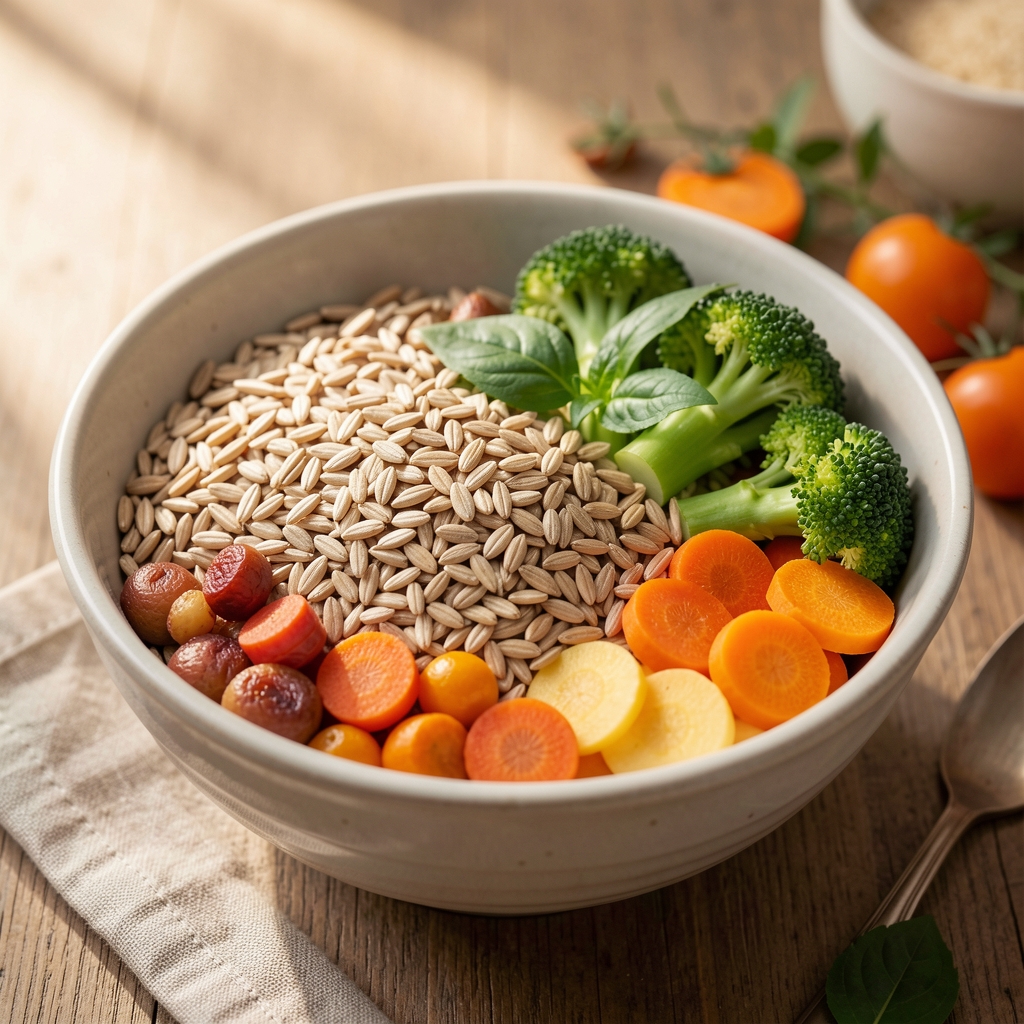
Portion awareness is a concept frequently misread as restriction. In nutritional observation, it refers instead to attention — the practice of noticing what is on the plate before and during a meal, rather than imposing external limits. This distinction matters. A person who eats from a smaller plate because habit has settled there is practicing portion awareness in its most natural form; a person who counts every gram is performing something different and considerably more effortful.
The research literature suggests that meal frequency — how often food is consumed across a day — interacts with portion size in ways that vary by individual. Some people find that three structured meals maintains their weight equilibrium; others find that smaller, more frequent eating suits their body's rhythm. The editorial position of this journal does not prescribe either: what is observed is that individuals who eat according to a settled, recognisable rhythm tend to report greater stability in their relationship with food.
Home cooking introduces a specific variable into the portion equation. When meals are prepared from raw or minimally processed ingredients, the person cooking gains direct knowledge of what goes into each dish. This ingredient-level awareness has been associated — in both observational studies and in the reported experience of food writers who have tracked their own diets — with more stable body weight over time.
"The foods placed habitually on a plate tend to account for more of the body's weight story than the foods eaten occasionally."
Eleanor Whitfield — Kalden Field Notes, January 2026
Seasonal Produce in the Weekly Record
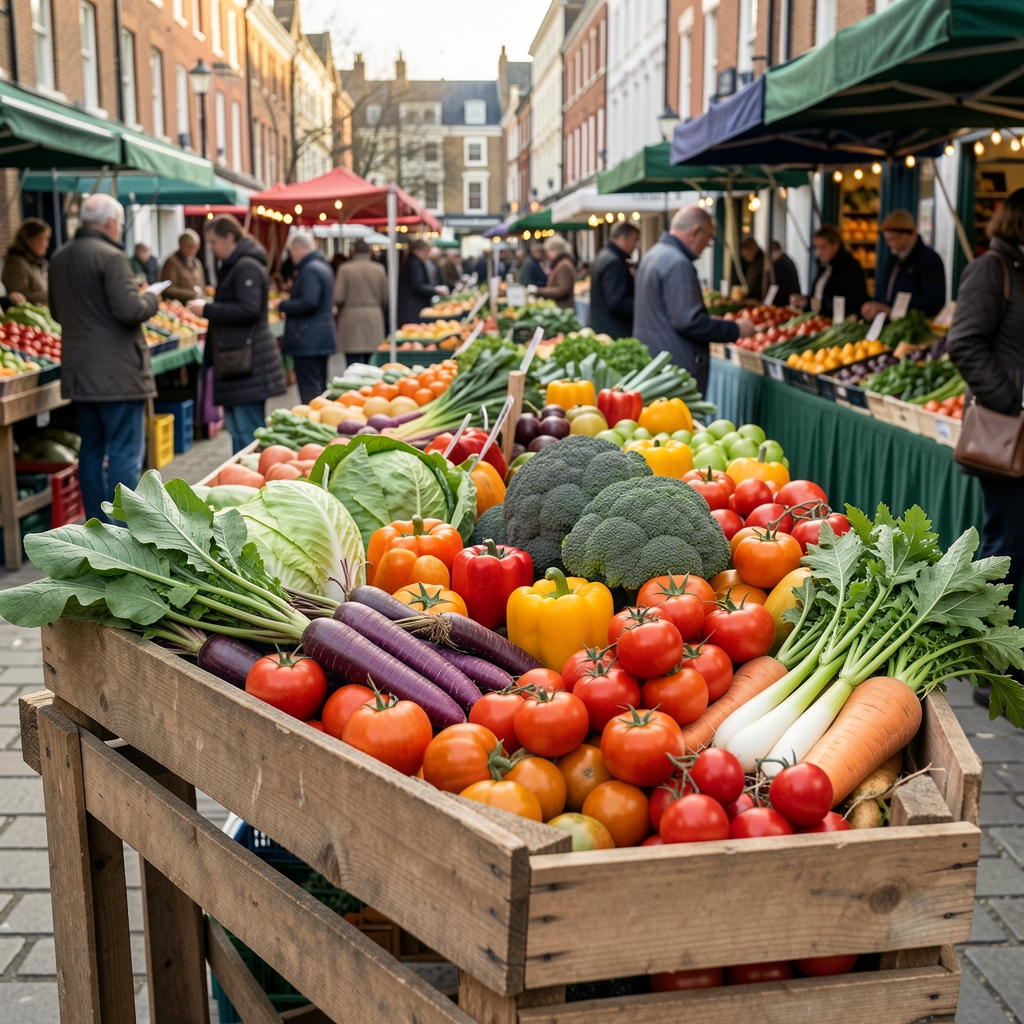
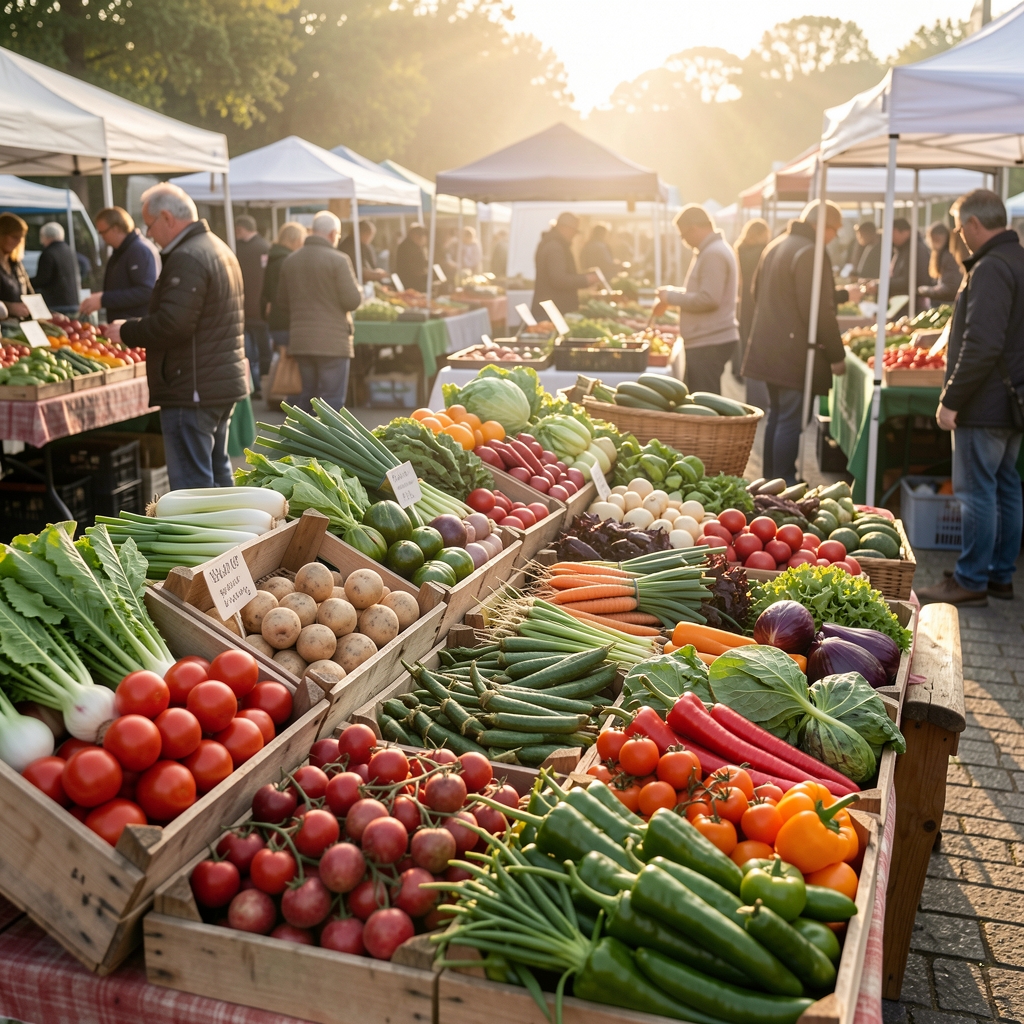
Seasonal produce exerts a particular kind of influence on food choices that is rarely discussed in weight-focused contexts. When a vegetable is in season, it is more available in local markets, typically less expensive, and frequently more flavourful than its out-of-season equivalent. These three factors together make it more likely to be purchased, and more likely to be eaten without extensive preparation.
A nutritionist keeping a weekly food record across a calendar year in London would observe the plate shift considerably: the summer months bring courgettes, runner beans, tomatoes, and salad leaves in quantity; the autumn months bring squash, root vegetables, and brassicas. Each seasonal rotation introduces different nutrients, different fibre profiles, and different culinary possibilities. The result is a diet that shifts naturally rather than by instruction.
This kind of natural dietary variety — driven by season rather than by plan — has been observed to correlate with what dietary researchers call "nutritional diversity": a broad range of micronutrients drawn from multiple plant sources. The evidence-informed view is that this diversity supports long-term weight awareness more reliably than any single "superfood" eaten in quantity out of season.
Movement, Activity, and the Eating Pattern
The relationship between sport, active lifestyle, and food choices is bidirectional. It is well-established that regular physical movement supports an active daily rhythm and can influence appetite regulation; less frequently discussed is the way in which food choices influence energy levels and, through them, the willingness to remain active.
A diet heavy in processed and refined foods tends to produce energy fluctuations — periods of alertness followed by troughs that make sustained movement less likely. A diet oriented toward whole foods and plant-based meals — with protein-rich whole foods, fibre, and complex carbohydrates — contributes to more sustained energy through the day, which in turn supports regular movement.
The observational record from sports nutrition research points in the same direction: active individuals who maintain weight balance are typically those whose food choices support their activity level rather than running counter to it. The balance is not a formula but a practice — one that develops through attention to how food choices affect the body's readiness for movement, day after day.
Food Journalling as an Observational Practice
Food journalling — the practice of keeping a written or digital record of meals, snacks, and eating occasions — is one of the most consistently cited tools in the nutrition literature for supporting weight awareness. Its mechanism is not primarily caloric: the act of recording draws attention to patterns that might otherwise remain invisible.
A person who begins journalling their food choices for the first time frequently reports discovering eating occasions they had not consciously registered — the standing snack, the finishing of a child's plate, the distracted handful taken from a shared bowl. These additions are not failures; they are data. The journal turns invisible habit into visible pattern, and it is from that visibility that informed choices about food become possible.
The form of the journal matters less than its regularity. Whether handwritten in a small notebook or entered into a phone application, the value lies in the consistent act of recording and the periodic reviewing. Most practitioners recommend reviewing the week's entries on Sunday evening: not to judge, but to notice. What was the ratio of home-cooked to purchased meals? On which days were vegetables absent? When did eating occur outside recognised meal times? These questions, asked without self-criticism, produce a clearer nutritional picture than any retrospective estimate.
- 01 The ratio of whole-to-processed foods across a week is more significant than any individual meal choice.
- 02 Portion awareness develops through attention to the plate, not through external restriction.
- 03 Seasonal produce introduces natural dietary variety that supports nutritional balance without planning.
- 04 Regular movement and food choices support one another; whole foods contribute to sustained energy for an active lifestyle.
- 05 Food journalling surfaces invisible eating patterns and enables evidence-informed adjustments over time.